mirror of
https://github.com/dw-0/kiauh.git
synced 2025-12-14 02:54:28 +05:00

50 lines
3.0 KiB
Markdown
50 lines
3.0 KiB
Markdown
# Raspberry Pi Setup
|
|
|
|
This guide will help you set up a Raspberry Pi for running Klipper and other,
|
|
Klipper related 3D printing software. In case you are using a different single-board
|
|
computer (SBC), please refer to the manufacturer's instructions for installing
|
|
a compatible version of Linux on your device.
|
|
|
|
It is assumed that you have at least a Raspberry Pi 3 or newer, along with a
|
|
microSD card (at least 8GB, preferably 16GB or more) and a power supply.
|
|
Additionally, you will need a computer with an SD card reader to prepare
|
|
the microSD card.
|
|
|
|
KIAUH requires a Linux operating system that has already been flashed to your
|
|
Raspberry Pi's (or other SBC's) microSD card. As a result, you must ensure that you
|
|
already have a functional Linux system on hand before you can proceed with
|
|
installing KIAUH. `Raspberry Pi OS Lite` (either 32bit or 64bit) is a recommended Linux image
|
|
if you are using a Raspberry Pi.
|
|
|
|
---
|
|
|
|
To flash `Raspberry Pi OS Lite` to your microSD card using the official [Raspberry Pi Imager](https://www.raspberrypi.com/software/),
|
|
follow the steps below. If you encounter any issues or need further assistance, please refer to the [official Raspberry Pi documentation](https://www.raspberrypi.com/documentation/computers/getting-started.html).
|
|
|
|
1. Open the Raspberry Pi Imager application on your computer.
|
|
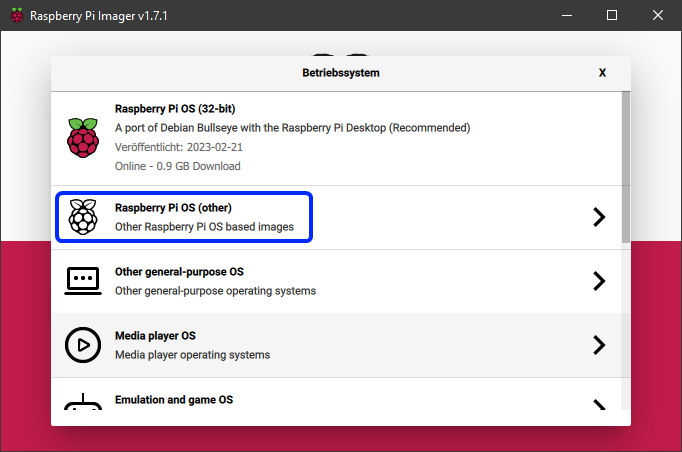
2. Click on `Choose OS` and select `Raspberry Pi OS (other)`.
|
|
|
|
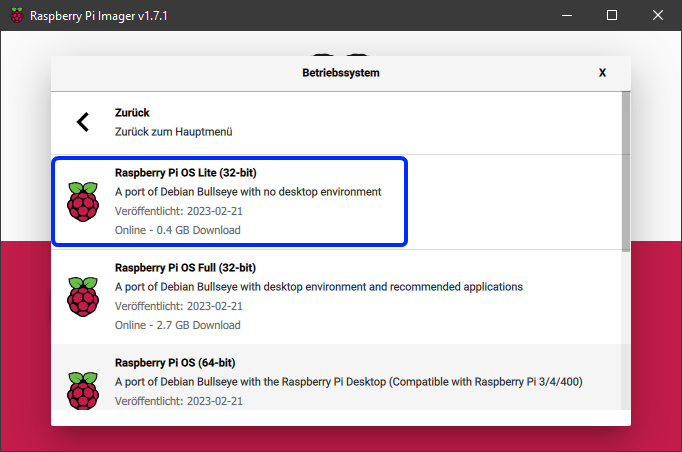
3. Choose `Raspberry Pi OS Lite (32bit)` (or 64bit if desired).
|
|
|
|
4. Insert the microSD card into your computer's SD card reader.
|
|
5. In the main menu of the Imager, select the correct microSD card.
|
|
6. Click the gear icon at the bottom left of the main menu to open advanced options.
|
|
7. Enable SSH and enter your Wi-Fi credentials.
|
|
|
|
!!! info
|
|
Wi-Fi is only necessary if you want to connect to your Raspberry Pi over a wireless network. If you plan to use a wired Ethernet connection, you can skip this step. SSH is required for remote access to your Raspberry Pi, so make sure to enable it.
|
|
|
|
8. Click `Save` to close the advanced options menu.
|
|
9. Click `Write` to start flashing the image to the microSD card.
|
|
|
|
!!! warning
|
|
All data on the microSD card will be overwritten!
|
|
|
|
10. Once the flashing process is complete, safely eject the microSD card from your computer.
|
|
11. Insert the microSD card into your Raspberry Pi.
|
|
12. Connect your Raspberry Pi to a power source to boot it up.
|
|
13. Wait for a few minutes to allow the Raspberry Pi to complete its initial setup.
|
|
14. You can now connect to your Raspberry Pi via SSH using the IP address assigned by your router. The default username is `pi` and the default password is `raspberry`.
|
|
|
|
If you successfully connected to your Raspberry Pi via SSH, you can proceed to install KIAUH by following the instructions in the [Installation Guide](installation.md).
|